Buyer guide
The complete guide to custom branded grinders
Everything a brand, dispensary or artist needs to know before putting their logo on a grinder — materials, branding methods, quantities, costs and how the process actually works.
July 2026
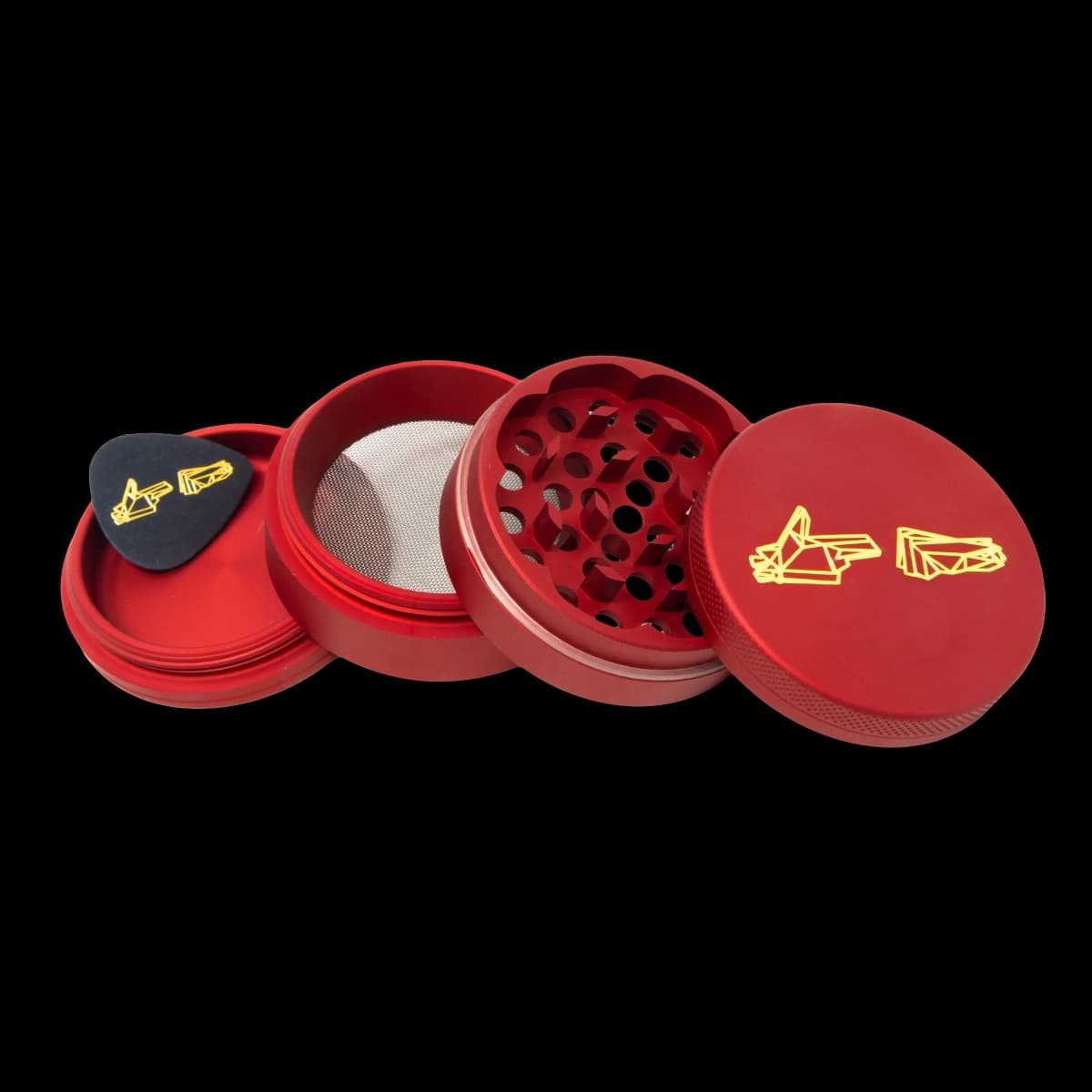
Why grinders make exceptional merch
Most branded merchandise gets used once and forgotten. A grinder is different: it sits on a customer's table and gets handled almost daily, which means your logo earns repeat impressions for years instead of minutes. That's why bands, dispensaries and cannabis brands treat custom grinders as core merch rather than a giveaway — done well, they're collectible product, not promo junk. The difference between the two comes down to three decisions: the metal, the branding method, and the machining quality.
Start with the metal
The single biggest quality signal is what the grinder is made of. Cheap promotional grinders use zinc alloy castings that feel heavy but wear fast — threads grind, coatings flake, teeth dull. Premium custom grinders are CNC-machined from aircraft-grade aluminium: lighter, tighter tolerances, anodized colour that won't chip, and razor-cut teeth that stay sharp. GMI machines every grinder in-house from aircraft-grade aluminium with rare-earth magnets and high-micron stainless screens.
2-part or 4-part?
A 2-part grinder is a lid and a grinding chamber — compact, simple, cheaper, ideal for giveaways and entry price points. A 4-part adds a screened middle chamber and a catch tray for pollen, which is what daily users actually want to own. If your goal is retail shelf presence or serious fan merch, go 4-part; if you're seeding an event or bundling with another product, 2-part stretches the budget further.
Choose your branding method
There are five proven ways to put a logo on a grinder, each with a different look and budget profile:
- Gold 3D engraving — logo carved into the metal, finished in mirror gold. The signature premium look.
- Silver 3D engraving — same deep cut, polished silver finish. Clean and technical.
- Rose gold 3D engraving — warm metallic that pairs with pink, black and pastel bodies.
- Laser engraving — crisp etch into the anodized coat; holds fine lines, small text and QR codes.
- Full-colour UV print / polycarbonate stickers — photographic colour or budget-friendly domed decals.
Quantities, proofs and timelines
Traditional manufacturers gate custom work behind 100–500-unit minimums. That's changing: GMI runs no minimum order at all, so you can sample a single unit before committing to a full run. Whatever the quantity, insist on a digital proof before anything is machined — you should see exactly how your artwork sits on the lid, in the right finish, before you pay for production. GMI turns proofs around in about one business day, and production typically runs 3–4 weeks from approval, shipping worldwide.
What it costs
Custom grinder pricing is tiered — per-unit price drops as quantity rises. As a real reference point: GMI's 2-part premium grinder runs $50 for a single unit, $39 each at two-plus units, and $25 each at five-plus; the 4-part runs $75 single, $65 at two-plus and $30 at five-plus, with wholesale pricing on volume runs. Add-ons like custom packaging or multi-position branding affect the number, but the structure is always the same: the metal and machining set the floor, the branding method sets the ceiling.
How to start
Have your logo ready as a vector file if possible (SVG, AI, EPS or PDF — a clean high-resolution PNG also works), pick a body colour and technique, and request a quote. If you want to see it first, use a live customizer to preview your logo on a lid in different finishes before you ever talk to a salesperson — GMI's customizer does exactly that, and sends your design straight into the quote.

