Summary
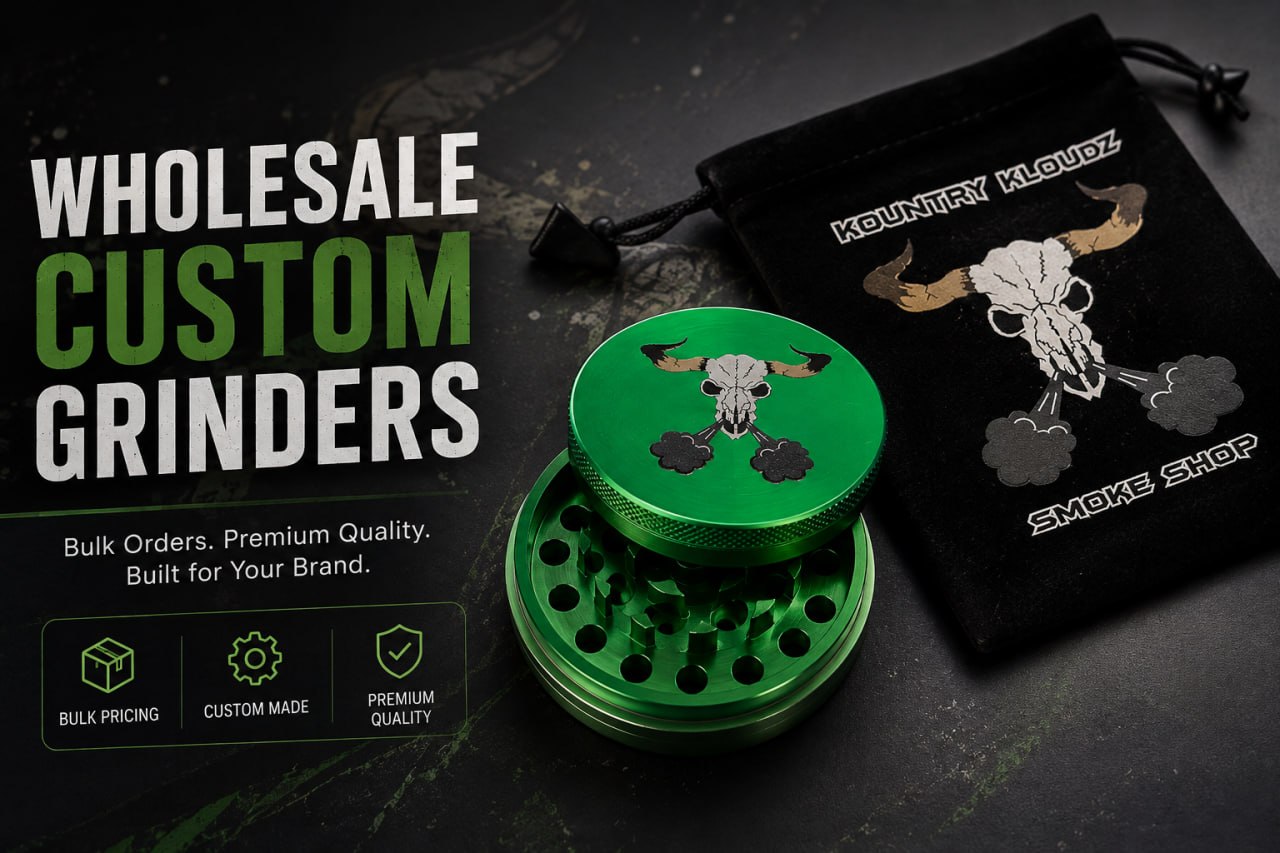
A wholesale custom grinder is a CNC-machined grinder ordered in volume (100+ units) with your logo permanently engraved into the metal. This guide covers pricing tiers, what drives the cost, how long production takes, and six questions to ask before you commit. If you run a dispensary and are reading your first wholesale quote, this helps you avoid the expensive mistakes.
The ROI Math Most Dispensaries Miss
A branded grinder is a marketing asset that keeps working for years. It does not stop when you stop paying for ads.
At $11 per unit, a grinder used 5 to 14 times per week generates over 400 impressions per year. Over three years, that is 1,200 impressions at less than $0.01 each. Meta ads cost $10 to $15 for 1,000 impressions (Affect Group, 2025). The grinder wins by a factor of 10.
Then there is the referral layer. When your customer uses the grinder in a group, other people see your logo. Those people can become customers too. New Frontier Data puts the average dispensary customer acquisition cost at $23. A grinder that brings in one referral pays for itself twice over.
Customer acquisition cost (CAC) is the total spend needed to convert one new customer. In cannabis, 88% of brands face ad platform restrictions (BudAuthority, 2026). A physical product that generates word-of-mouth is one of the few channels left.
A Real Example
Jacana, a Jamaican cannabis brand, ordered 500 custom rose gold grinders with their logo in 3D engraving. Within six months, customers were posting photos on Instagram with no paid promotion. Cost per impression came in under $0.01. Their Meta ads ran $0.03 to $0.05 per impression. They reordered 2,000 units the following quarter.
"The grinders became our best marketing tool. Customers post them on Instagram without being asked." Jacana brand team
Why Most Dispensaries Underestimate Branded Merch
The mistake is comparing a one-time merch cost to a one-month ad budget. A grinder works for years. Ads stop when the budget runs out. The $11 grinder that produces 1,200 direct impressions looks expensive at first glance. Factor in secondary exposure. Friends see it during group sessions. People ask about the brand on the lid. The effective cost per impression keeps dropping. Dispensaries that test branded grinders typically see 60 to 80% lower CAC compared to paid social.
This is not a theory. The Advertising Specialty Institute's Global Ad Impressions Study found promotional products average 3,300 impressions over their lifetime. 85% of recipients remember the advertiser's name. For grinders used daily in social settings, those numbers are conservative.
Why Repeat Exposure Works
A grinder gets used 5 to 14 times per week. Every use is a brand touchpoint. The person feels the weight of the metal. They see your logo every time they twist the lid. Over months, this builds familiarity. Familiarity builds trust. That trust makes them more likely to return to your dispensary. It also makes them more likely to tell a friend about you.
Research backs this up. Repeated brand exposure increases preference even without conscious awareness (American Psychological Association). A grinder on a coffee table does exactly that. It puts your logo in front of people repeatedly. No ad blocker can stop it.
The Risk Calculation
Three risks to factor in before you order.
Risk 1: Cheap materials. Zinc alloy grinders cost $2 to $4 per unit. Within 90 days, 20% arrive defective. The rest show corrosion and blunt teeth. The negative brand association costs more than never giving anything out.
Risk 2: No proof process. An off-center logo replicated across 1,000 units says "nobody checked." Digital proofs exist to catch this. If a manufacturer will not send one, walk away.
Risk 3: Commodity product. In saturated markets, generic grinders blend in on shelves. 3D engraving earns its premium because it is tactile, permanent, and looks unlike anything the competition distributes. The Promotional Products Association International reports that premium hard goods generate 2.3x more impressions than commodity alternatives.
Wholesale Pricing Tiers
2-Part Premium Grinder (bulk pricing):
| Quantity | Price/Unit | Total |
|---|---|---|
| 1 | $50 | $50 |
| 2 | $39 | $78 |
| 5 | $25 | $125 |
| 25 | $12.75 | $318.75 |
| 50 | $11 | $550 |
| 100 | $6.99 | $699 |
| 250 | $6.29 | $1,572.50 |
| 500 | $5.99 | $2,995 |
| 1,000 | $4.99 | $4,990 |
4-Part Premium Grinder (bulk pricing):
| Quantity | Price/Unit | Total |
|---|---|---|
| 1 | $75 | $75 |
| 2 | $65 | $130 |
| 5 | $30 | $150 |
| 25 | $18 | $450 |
| 50 | $13.49 | $674.50 |
| 100 | $9.99 | $999 |
| 250 | $8.99 | $2,247.50 |
| 500 | $7.99 | $3,995 |
| 1,000 | $7.25 | $7,250 |
*Prices are for 6061 aircraft-grade aluminium with 3D metal engraving. Other branding methods may adjust final cost.*
How the Price Drops Work
The unit price keeps falling as quantity rises. This is because CNC setup costs get spread across more units. The PPAI reports metal hard goods see 35 to 55% cost reduction between 100 and 1,000 units. At 100 units, a 4-part grinder costs $9.99 each. At 1,000 units, it drops to $7.25. That is a 27% saving per unit.
What Drives the Cost
Material matters. Zinc alloy grinders cost $2 to $4 per unit. They are heavy, corrode fast, and teeth go blunt within 3 months. 6061 aircraft-grade aluminium is an aerospace-grade alloy with 310 MPa tensile strength and natural corrosion resistance. It runs $6 to $9 per unit at wholesale. The customer feels the difference on day one.
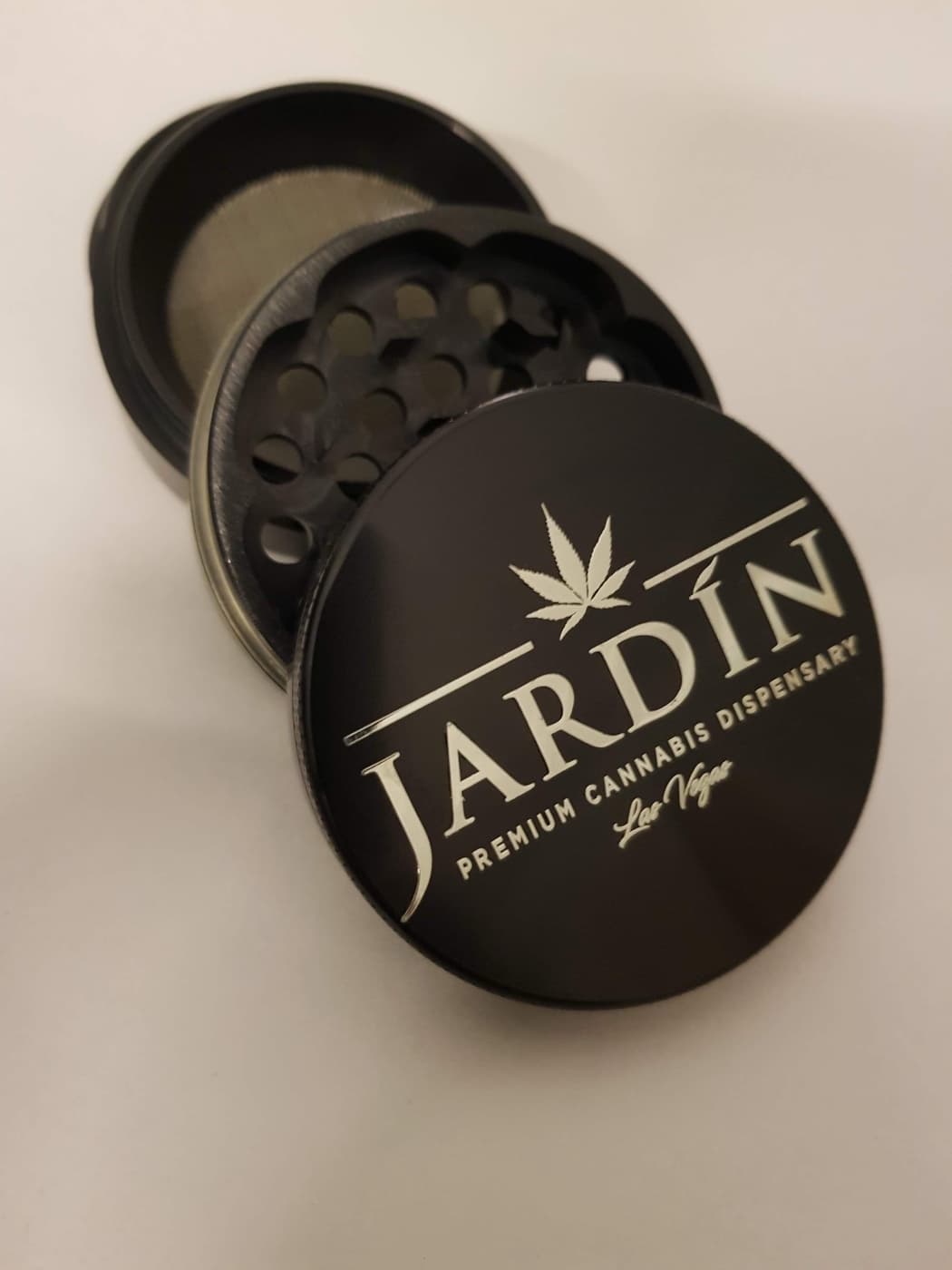
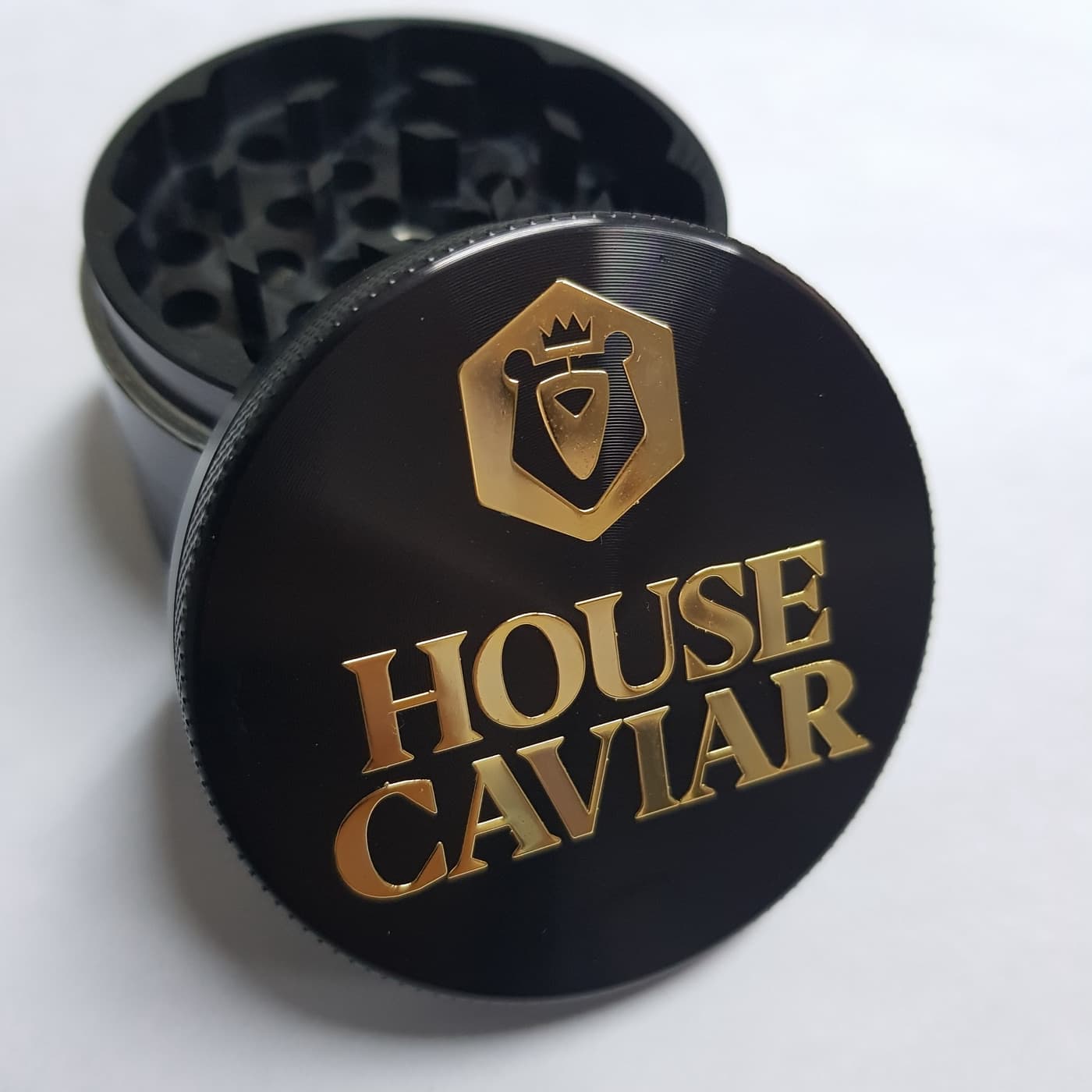
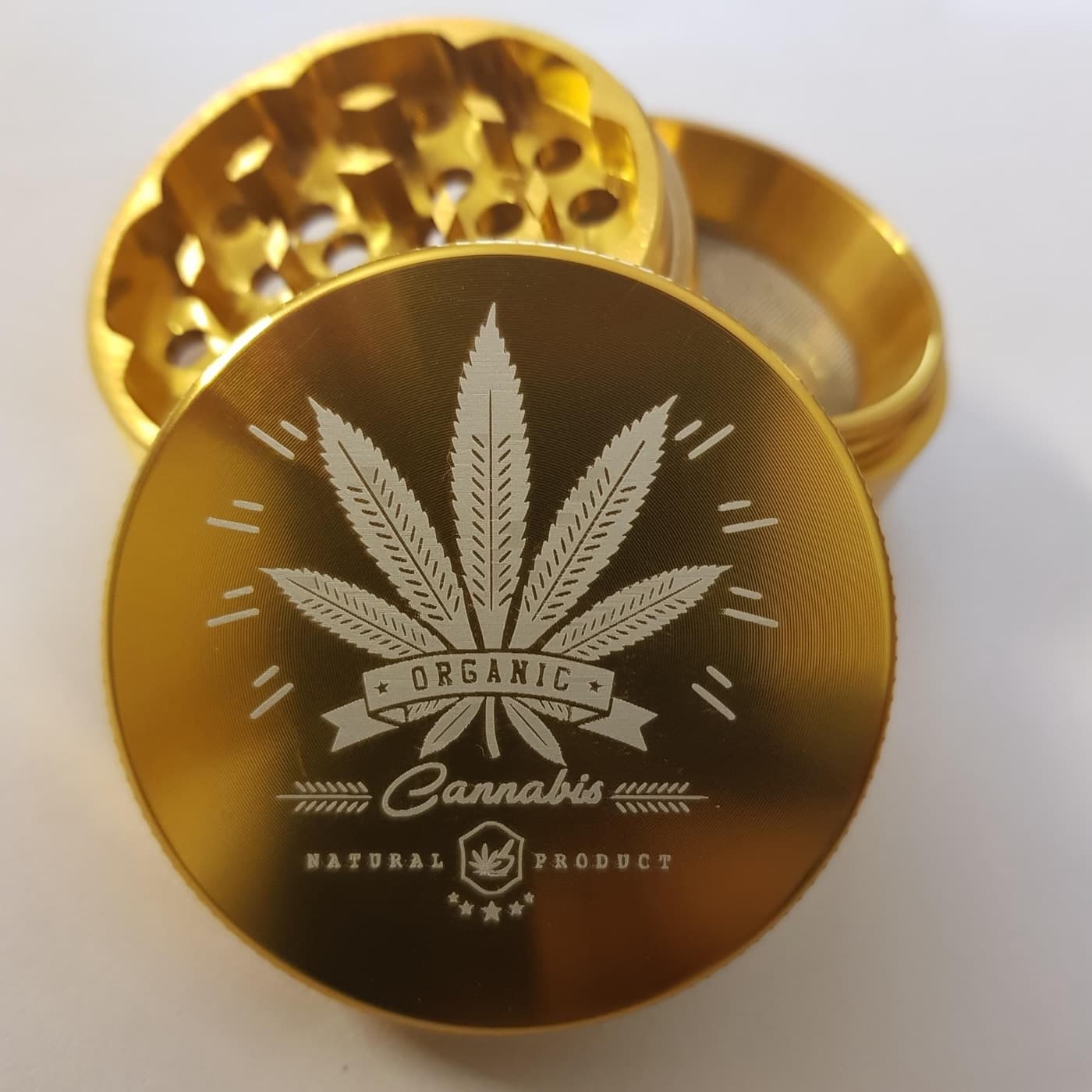
Branding method matters. 3D metal engraving is a CNC process that leaves designs raised and embossed out of the metal, finished in gold, silver, black, or rose gold. The result is permanent and tactile. UV printing applies full-color ink cured with UV light. It looks great but sits on the surface. Laser etching removes the anodized layer to expose raw aluminium beneath.
The hidden costs hurt more. No proof process means 1,000 units with a crooked logo. No QA means 15 to 20% arrive defective. No spec sheet means the factory swaps in cheaper materials. These mistakes cost more than any supplier savings ever will. A McKinsey report on supplier quality found that the cost of poor quality in manufacturing runs 15 to 20% of sales revenue. That math makes cheap suppliers expensive.
Production Timeline
Standard production:
- Free digital proof within 1 business day
- Production: 10 to 20 business days after approval
- Shipping: 15 to 20 days to US/UK/Canada via DHL/FedEx
Questions to Ask Any Manufacturer
Before you commit to a wholesale order, get clear answers to these six.
Frequently Asked Questions
What is a wholesale custom grinder?
A wholesale custom grinder is a CNC-machined grinder ordered in bulk (100+ units) with your logo permanently marked. Unlike retail grinders, wholesale orders are produced to your spec and branded for your business. New Frontier Data reports the average dispensary customer acquisition cost is $23. This makes branded merchandise one of the most efficient retention channels available.
How much do wholesale grinders cost?
2-part grinders start at $4.99 per unit at 1,000 units. 4-part grinders start at $7.25 per unit at 1,000 units. Price drops as quantity rises. The PPAI reports metal hard goods see 35 to 55% cost reduction between 100 and 1,000 units. This comes from amortized setup costs and CNC efficiency.
What is the minimum order for custom grinders?
At GMI, there is no minimum. Order a single unit to test quality before scaling. The ASI found promotional products generate 3,300 impressions over their lifetime. Even small test orders deliver real brand value.
How long do custom grinders take?
You get a free digital proof within 1 business day. Production runs 10 to 20 business days after you approve the proof. Shipping to the US, UK, or Canada takes 15 to 20 days via DHL or FedEx. Rush production is available for urgent orders.
What branding methods are available?
Three main methods: 3D metal engraving leaves the design raised and embossed out of the metal, finished in gold, silver, black, or rose gold. Laser engraving removes the anodized layer to expose raw aluminium. Full-color UV printing applies ink cured with ultraviolet light. The ASI Global Ad Impressions Study found premium metal hard goods generate 2.3x more impressions per dollar than surface-printed alternatives.
Why choose 6061 aluminium over zinc alloy?
Zinc alloy grinders cost $2 to $4 per unit but corrode and blunt within 3 months. 6061 aircraft-grade aluminium has 310 MPa tensile strength and natural corrosion resistance. It costs more upfront but lasts for years. Quality failures cost more than the material savings. A defective grinder with your logo on it damages your brand.
How much do wholesale grinders cost per unit at wholesale?
2-part wholesale grinders cost $6.99 at 100 units and $5.99 at 500 (1,000+ is $4.99). 4-part is $9.99 at 100 and $7.99 at 500 (1,000+ is $7.25). No setup fee: free proof and revisions included.Are bulk branded grinders the same as wholesale grinders?
Yes. Bulk branded grinder and wholesale grinder describe the same product: 100+ CNC-machined aluminium grinders with your logo engraved. Both terms refer to volume pricing tiers in the table above.Can I order branded grinders with my own logo?
Yes. Any vector file (AI, EPS, SVG) or high-res PNG/JPG works. Upload at gmigrinders.com/customize for a free proof showing your grinder logo CNC-engraved before you order.What are wholesale grinders and who orders them?
Wholesale grinders are custom grinders ordered in volume by dispensaries, cannabis brands, and merch companies. At 100 units ($6.99/2-part) each grinder generates 1,200+ brand impressions at under $0.01, beating Meta CPM by 10×.Ready to see your logo on a grinder? Get a free digital proof →
Related reading:
- Custom Products: browse custom logo grinders, trays, and accessories
- Bulk Branded Grinders: custom-logo grinders from a single unit, no minimum
- Custom Grinder Pricing Guide - detailed breakdown of pricing
- Personalized Herb Grinder Guide - everything for single orders
- Cannabis Branded Merchandise Guide - broader merch strategy
- Jacana Rose Gold Grinder Case Study - how one brand built loyalty