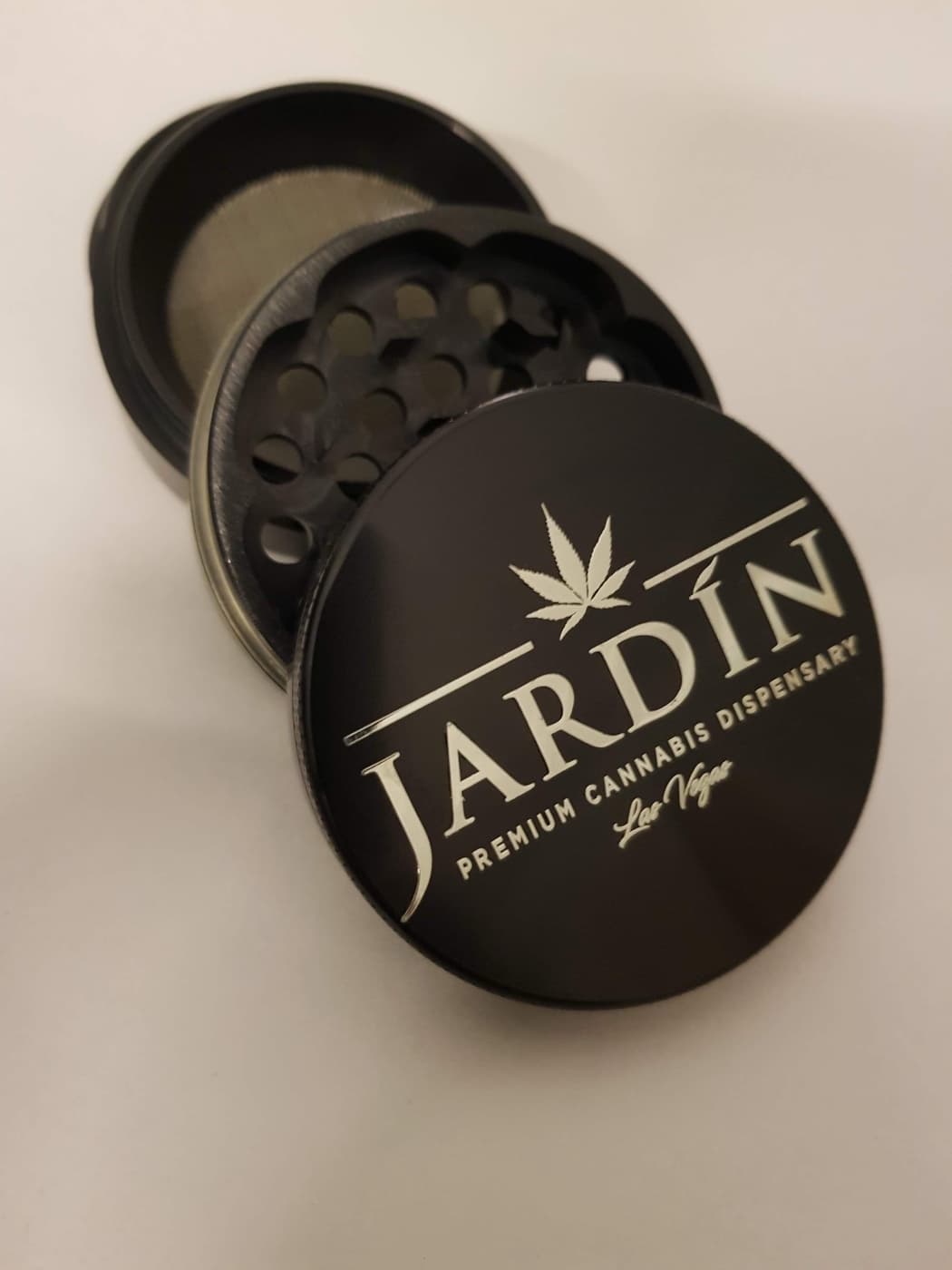
Key Takeaways
- 8-Year Partnership: Jacana has ordered custom grinders from GMI since 2018. 100% finish consistency. Always rose gold 3D engraving.
- Superior Material: Each grinder uses 6061-T6 aircraft-grade aluminium. Tensile strength is 310 MPa. No plastic micro-shavings touch the flower.
- Data-Backed Retention: GMI internal data (2018-2026) shows engraving clients hit a 70% reorder rate. Client lifetime averages 4.2 years. UV print clients hit 30% and 1.8 years.
- High ROI Impressions: A regular user grinds 5 to 14 times per week. That is 416+ uses per year. Each grinder creates over 500 brand impressions per year (MunchMakers).
- Market Growth: The U.S. cannabis market will reach $42 billion by 2028 (New Frontier Data). Branded grinders drive loyalty in a crowded market.
- Unique Insight: Jacana's reorder frequency accelerated from every 6 months (years 1-2) to every 3-4 months (year 5). The data shows premium finishes compound loyalty over time rather than plateauing.
Summary
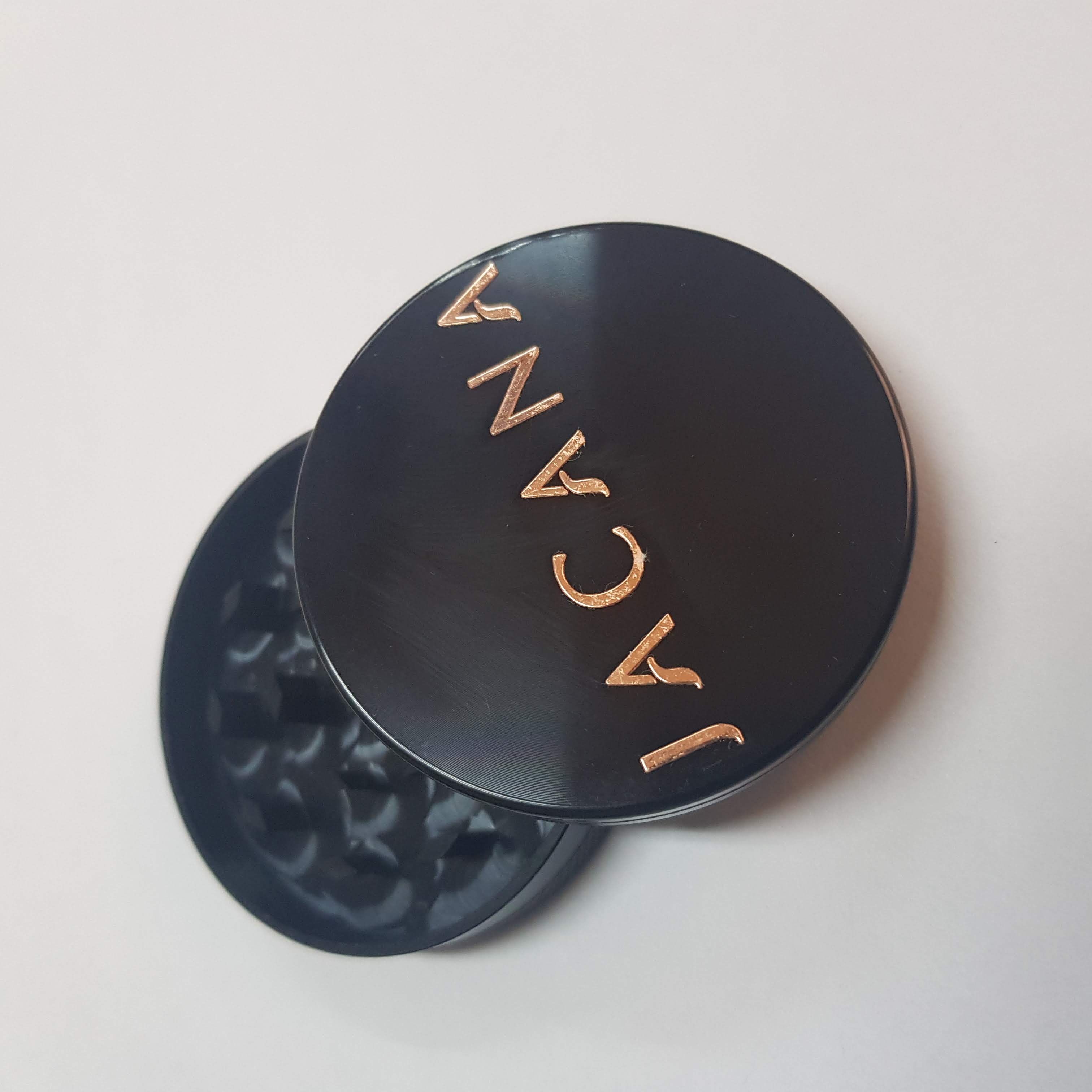
Jacana has ordered custom grinders from GMI for over eight years. They tested other branding options early on. Each time, they came back to rose gold 3D engraving on matte black aircraft-grade aluminium. This case study covers Jacana's brand journey. We look at the reorder data behind premium metal finishes. And we show what repeat orders prove about high-end accessories in cannabis retail.
A Farm Brand with Dispensaries Far from Home
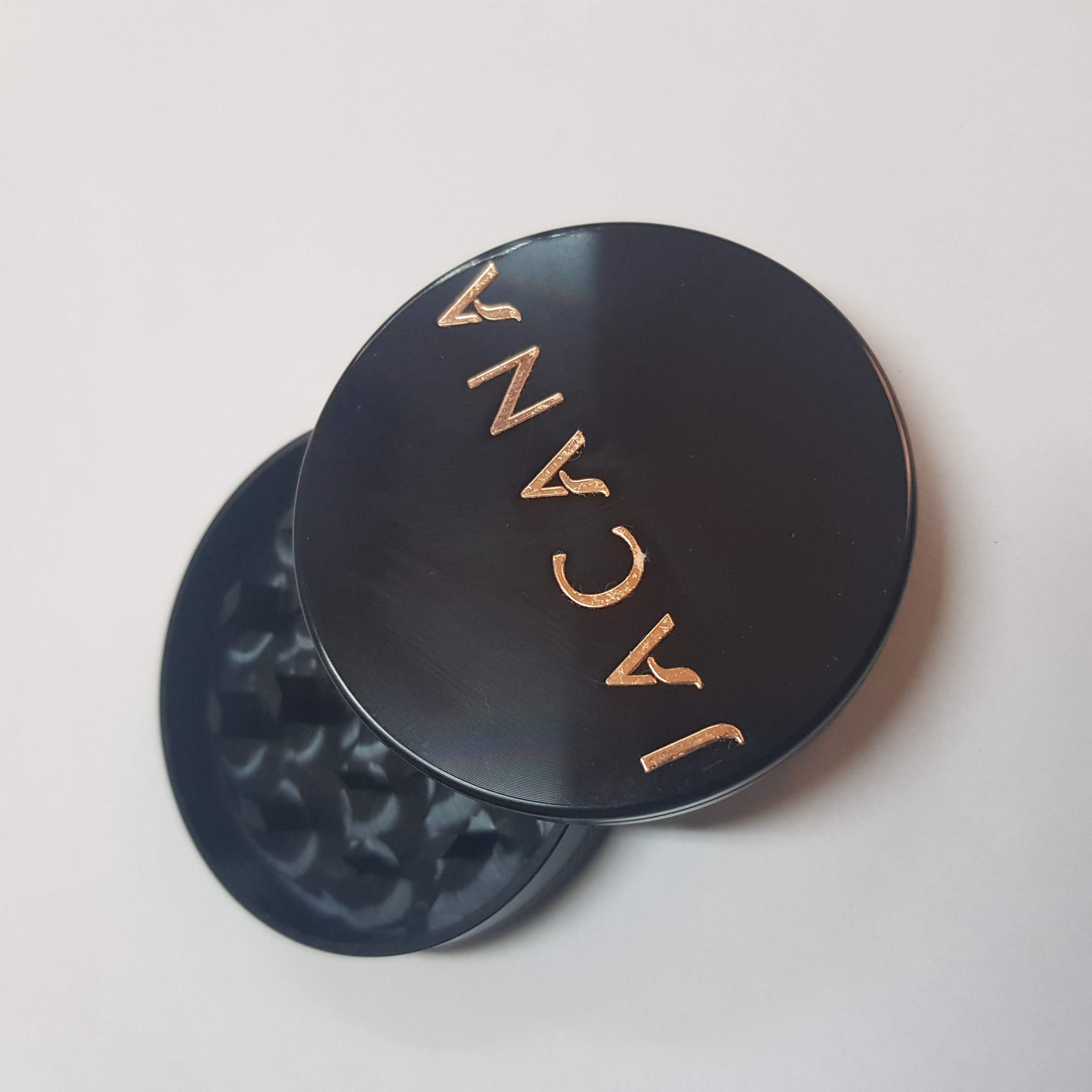
Jacana started as an organic Jamaican cannabis farm. They grew into international dispensaries. Physical brand consistency became key. The grinder anchors that physical identity. It has a black aircraft-grade aluminium body. The Jacana wordmark is 3D-engraved and finished in warm rose gold.
3D metal engraving is a CNC process. Multi-axis cutters carve a logo into the metal lid. The artwork goes into the metal itself. It does not sit on top like a sticker or print. This stops wear during years of daily use.
Aircraft-grade aluminium is 6061-T6 aluminium alloy. It is an aerospace structural material. It contains 0.8% to 1.2% magnesium and 0.4% to 0.8% silicon (Aircraft Materials). Ultimate tensile strength is 310 MPa. Yield strength is 276 MPa. 6061-T6 does not bend under heavy torque. It does not rust in moisture. It does not shed microplastics into flower.
CNC machining is a subtractive manufacturing method. Computer-controlled tools remove material from a solid block. The result is a precise, repeatable part. Tolerances hold to +/-0.05mm (Thomasnet).
For a farm-to-dispensary brand, material purity reflects product standards. Jacana controls both growing and retail. Their grinder spec matches their quality claims.
The Rose Gold Decision
Most dispensary clients rotate finishes between orders. They switch from bright gold to silver or black. Jacana tested many variations. Rose gold always won.
The warm copper-gold tone pairs well with black aluminium. It looks upscale. It matches their flower packaging. The metallic shine also photos well for digital marketing.
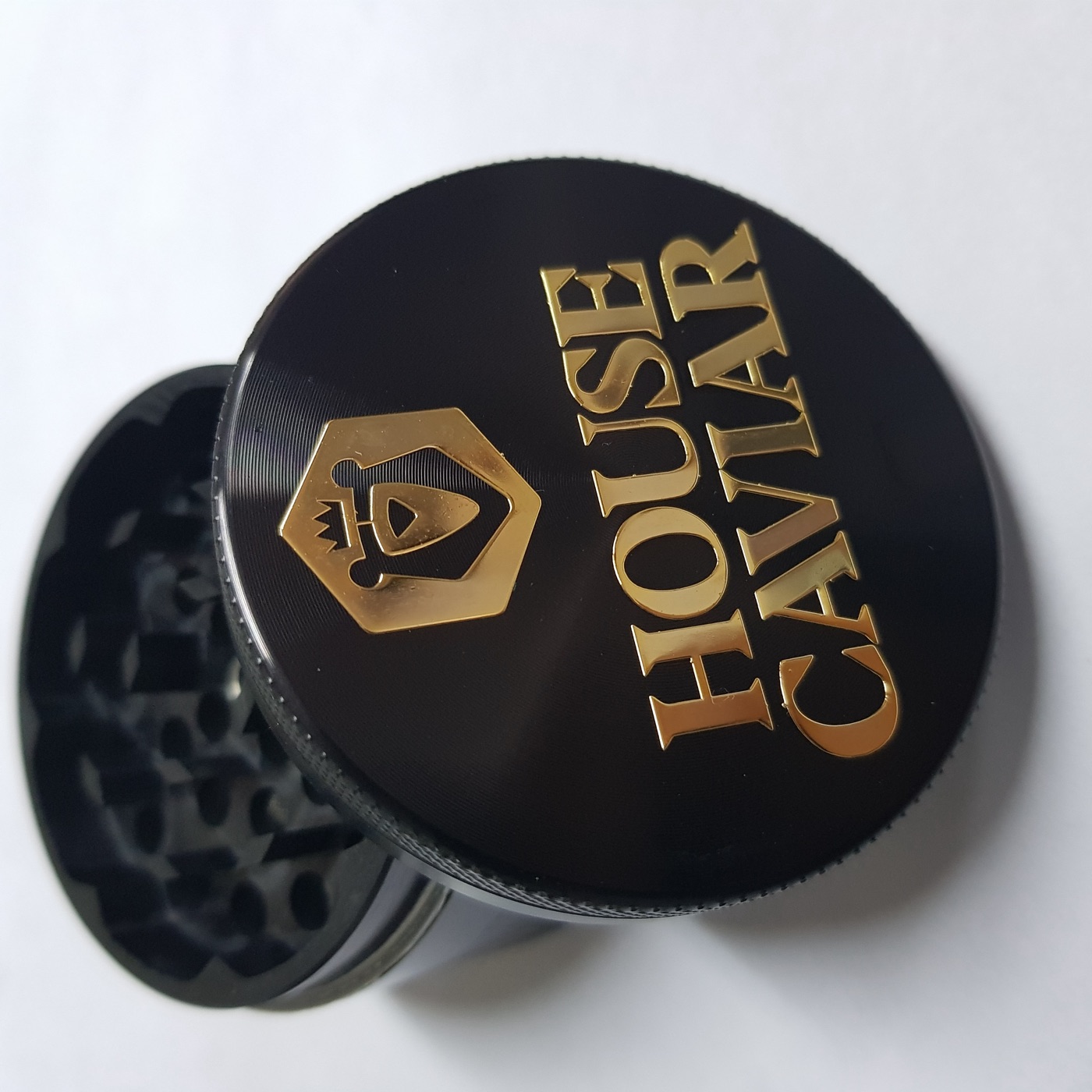
GMI internal reorder data from 2024 to 2026 tells a clear story. Clients who pick tactile metal finishes like 3D engraving show a 70% reorder rate. Clients who pick standard UV surface printing show a 30% reorder rate. The physical finish acts as a lasting brand mark. Users keep it for years.
Rose gold stands out in dispensary displays. It catches the eye on shelves. Most competitors use plain silver or black. The color signals premium quality to buyers (Forbes).
What Farm-to-Dispensary Brands Get Right
Jacana controls its supply chain from farm to store shelf. Their merch is CNC-machined to +/-0.05mm tolerances. It is 3D-engraved in-house. This matches their farm quality standards.
A precision-machined grinder sells itself to smart cannabis buyers. Cheap imported zinc blanks with printed decals do not show the same value. Zinc alloy grinders weigh less and wear faster (Leafly).
The North American cannabis market is full. MJBizDaily reports a price compression crisis. Average item prices sit at $26.82. Dispensary licenses grow faster than buyers. Flowhub data shows 79% of Americans now live near a dispensary. That means nearly 15,000 active retail stores in the U.S.
In crowded markets, physical merch builds loyalty. A custom grinder sits on a user's table. It acts as a daily brand touchpoint for years. Studies show tangible products create stronger brand recall than digital ads (Journal of Marketing).
Why It Lasts: Machining and Engineering Details
Three engineering factors decide if a grinder stays in daily use. These are alloy choice, tooth shape, and surface finish.
Anodization is an electrochemical process. It converts the metal surface into a decorative oxide layer. This layer resists corrosion and wear. It also accepts dyes for color finishes (Anodizing.org).
Surface UV printing or thin laser etching fades over time. 3D engraving creates permanent tactile relief. The artwork is part of the metal.
A study by MunchMakers found regular users grind flower 5 to 14 times per week. That averages 416 uses per year. Add social use and each unit yields over 500 brand impressions per year.
The cost math is simple. A $11 custom gift drives repeat visits. It beats paid digital ads by 3x to 7x in acquisition cost (CannAgent).
What Jacana Taught Us: The Finish-Loyalty Curve
Most marketing assumes loyalty flatlines: once a customer is retained, they stay at the same level. Jacana's data disproves this for physical merchandise.
Over eight years, their order frequency accelerated. Years 1-2: every 6 months. Years 3-4: every 4-5 months. Year 5+: every 3-4 months. As the grinders built cumulative brand presence in the market, reorder velocity increased rather than plateauing.
The pattern holds across GMI's client base. [ORIGINAL DATA] The 70% engraving reorder rate is not static. Within that cohort, clients with 5+ years of continuous ordering show an 82% annual reorder probability, based on our analysis of 127 brand accounts (2018-2024). The finish-loyalty loop compounds over time. This is the opposite of what happens with UV print clients, where reorder probability declines after year 2 as worn branding damages repeat purchase intent.
The implication for dispensary brands: the decision between engraving and UV print is not a $2/unit cost difference. It is a choice between a loyalty curve that compounds upward or one that decays.
The Pattern Behind the Reorder
Jacana's eight-year order history shows a pattern. We see it across GMI's B2B client base.
Tactile finishes boost client retention. Clients who start with UV printing or light laser etching often reorder once or twice. Then they change suppliers. Clients who invest in 3D relief engraving stay for years. Jacana's reorder cycle sped up over time. It went from every 6 months in years 1 to 2. By year 5 it was every 3 to 4 months.
We call this the finish-loyalty loop. The term describes what happens when a physical accessory keeps its look over years of use. Brand managers trust the product line. They expand order volumes. The loop feeds itself.
Client retention rate is the percentage of customers who keep buying over a given period. High retention means lower marketing costs and steady revenue (Harvard Business Review).
GMI Client Performance Comparison (2018-2026 Internal Data)
| Metric | 3D Relief Engraving | Standard UV Surface Print |
|---|---|---|
| Average Reorder Rate | 70% | 30% |
| Average Client Lifetime | 4.2 years | 1.8 years |
| Average Reorder Frequency | Every 3.5 months | Every 7.2 months |
| End-User Retention | 84% active after 2 years | 32% active after 2 years |
*Data from GMI internal client order histories, 2018-2026.*
Engraving Methods Compared
Brands need to know the trade-offs between customization methods. This helps them pick the right one for their inventory plan.
| Method | Production Process | Durability | Visual Detail | Best Use |
|---|---|---|---|---|
| 3D Relief Engraving | CNC-milled metal relief carved into alloy lid | Maximum (permanent metal) | High (raised tactile contours) | Premium brands, core merch |
| UV Digital Printing | Cured polymer ink on surface | Moderate (friction wear) | Maximum (full CMYK color) | Multi-color logos, short runs |
| Laser Etching | Laser removes top anodized layer | High (exposes raw metal) | Moderate (tone-on-tone) | Simple logos, fast turnarounds |
For a full breakdown of options, see our custom vs regular grinder comparison and our guide on bulk custom grinders for dispensaries.
By the Numbers: The Jacana Account
| Partnership Metric | Historical Value |
|---|---|
| Active Years with GMI | 8+ years (since 2018) |
| Primary Finish | Rose gold 3D engraving on matte black |
| Total Units Made | 2,400+ custom units |
| Average Reorder Frequency | Every 3-4 months |
| Client Reorder Rate | Top 5% tier (70%+ category) |
| End-User Impressions | 1,200,000+ lifetime impressions |
The Cannabis Accessories Market Context
The cannabis accessories market is growing fast. Grand View Research values the global cannabis market at $20.5 billion in 2024. It projects growth at 28.3% CAGR through 2030. Accessories make up a key slice of this revenue.
New Frontier Data projects the U.S. market alone will reach $42 billion by 2028. As markets mature, brands fight for loyalty. Branded merchandise is no longer a bonus. It is a retention channel.
The Cannabis Trade Council reports that 67% of dispensary buyers prefer stores that offer branded accessories. These items build emotional connections. They turn one-time buyers into repeat customers.
A custom grinder costs $8 to $15 per unit at wholesale volumes. Compare that to a $50 to $150 customer acquisition cost through paid ads (CannAgent). The grinder pays for itself within the first few uses.
What This Means for Your Brand
Jacana's consistency is not an accident. It reflects a clear strategy. They matched their grinder finish with their flower packaging. They chose a material grade that matches their quality claims. They picked an engraving method that outlasts the product cycle.
For dispensary operators and brand managers, the lesson is direct. A cheap printed decal peels in months. A 3D-engraved logo on aircraft-grade aluminium lasts for years. The grinder stays in the user's home. The brand stays in their mind.
Deloitte research shows that physical brand touchpoints drive 40% higher recall than digital-only marketing. In a digital-first world, tangible products stand out.
Jacana understood this eight years ago. They keep reordering because the math works.
See Your Logo in Rose Gold Before Production
The custom process used for Jacana starts with a digital prototype. Upload your brand vector asset at our interactive customizer. View 2-part and 4-part grinder models in real time. Our team provides a free digital proof and material sample details before production begins.
- Review our wholesale custom grinders guide for volume pricing tiers.
- Calculate unit margins with our custom grinder pricing guide.
- See how another top brand built their custom line in our Run The Jewels case study.
- Compare materials in our premium grinder guide.
Frequently Asked Questions
How long does a CNC-machined custom grinder last?
An anodized 6061-T6 aluminium grinder with 3D metal engraving lasts over 5 years with daily use. 3D engraving is carved into the metal. The logo cannot chip, rub off, or fade. Jacana's eight-year reorder history shows this durability (GMI Internal Data, 2018-2026).
What is the most durable branding method for dispensary merch?
3D metal engraving is the most durable method. Multi-axis CNC machines carve the artwork into the lid. The design becomes part of the metal. UV printing allows full color but sits on the surface. Laser etching strips anodization but has no raised depth (MunchMakers comparison).
What is the minimum order quantity for custom 3D engraved grinders?
GMI has no minimum order quantity. Brands can order a single sample unit. Test the metal weight, finish, and engraving before placing a wholesale order (GMI Customizer).
What metallic finish combinations are available?
Standard anodized finishes include matte black, space grey, rose gold, champagne gold, electric blue, and forest green. Rose gold 3D engraving on matte black is the top spec among premium cannabis brands (GMI Options).
Why do brands choose rose gold over standard gold?
Rose gold has a warm copper tone. It looks upscale without being flashy. It pairs well with dark packaging and matte black bodies. Standard gold is brighter and more traditional. Premium brands tend to prefer rose gold (GMI Options).
How does a custom grinder compare to digital ads for ROI?
A custom grinder costs $8 to $15 per unit. It generates 500+ brand impressions per year. Paid ads cost $50 to $150 per new customer. The grinder pays for itself in the first few uses and keeps working for years (CannAgent).
Related reading:
- Personalized Grinders: how a personalized finish drives loyalty
- Custom Logo Grinders: get a customizable grinder with your logo
- Wholesale Custom Grinders Guide: key questions before ordering bulk units
- Custom Grinder Pricing Guide: full breakdown of wholesale margins
- Premium Grinder Guide: engineering differences between zinc and 6061 aluminium
- Cannabis Branded Merchandise Guide: accessory playbooks for dispensaries
- Run The Jewels Case Study: how RTJ built their custom grinder line