Key Takeaways
- Four Decisions: Material, branding method, order quantity, and post-purchase quality drive every custom grinder choice.
- Metal Wins for Longevity: 3D-engraved 6061-T6 aluminium grinders last 5+ years. They generate over 500 brand impressions per year.
- Volume Cuts Cost: Per-unit price drops from $50 at 1 unit to $5.99 at 500+ units for 2-part grinders.
- Ask Five Questions: The answers tell you if a supplier is a real manufacturer or just a reseller.
Summary
Picking a custom grinder comes down to four decisions. You pick a material. You pick a branding method. You pick an order quantity. And you think about what happens after someone takes it home. This guide walks through each choice. It also gives you five questions to ask any supplier before you place an order.
The Four Decisions
1. Metal or Plastic?
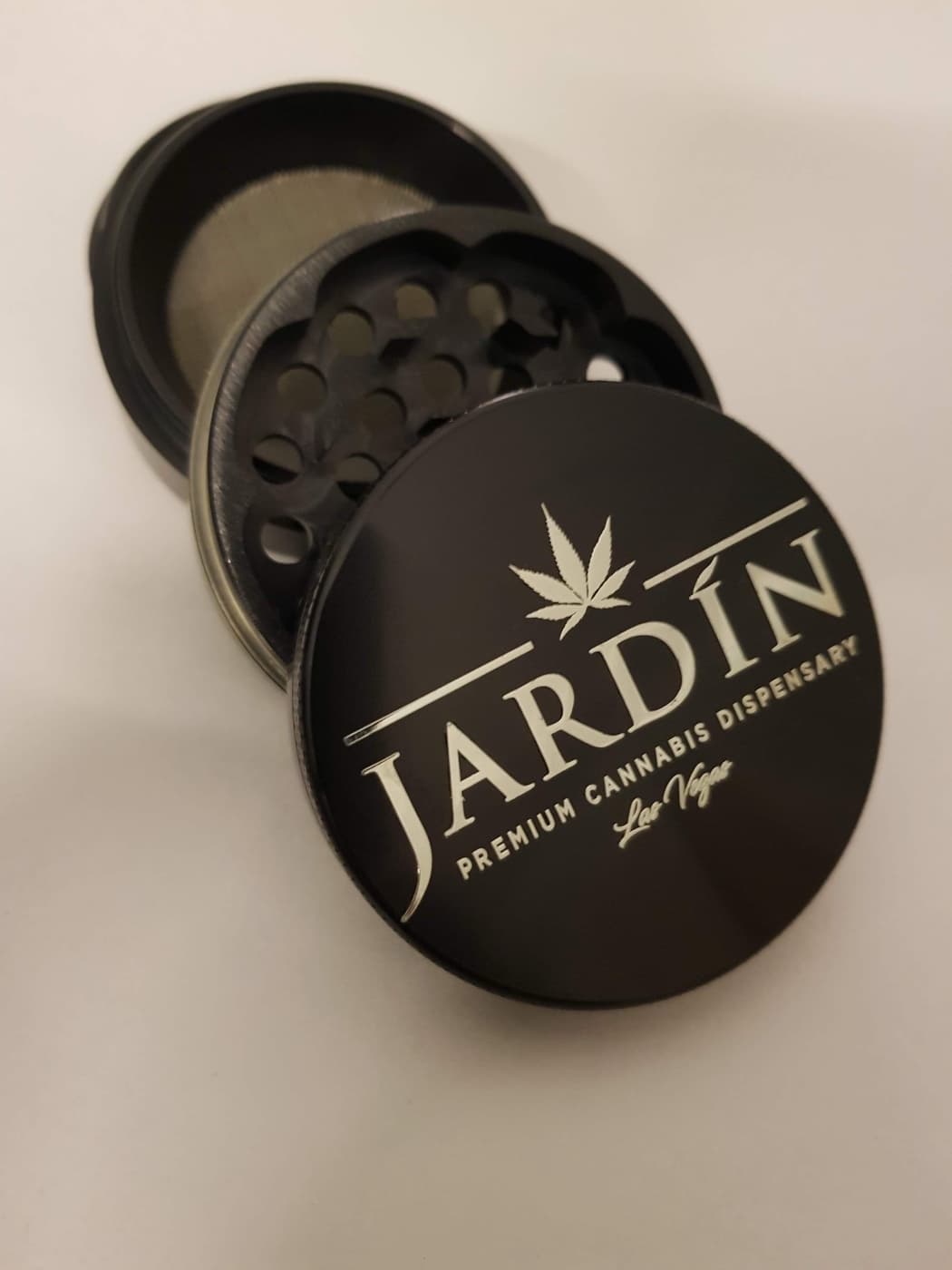
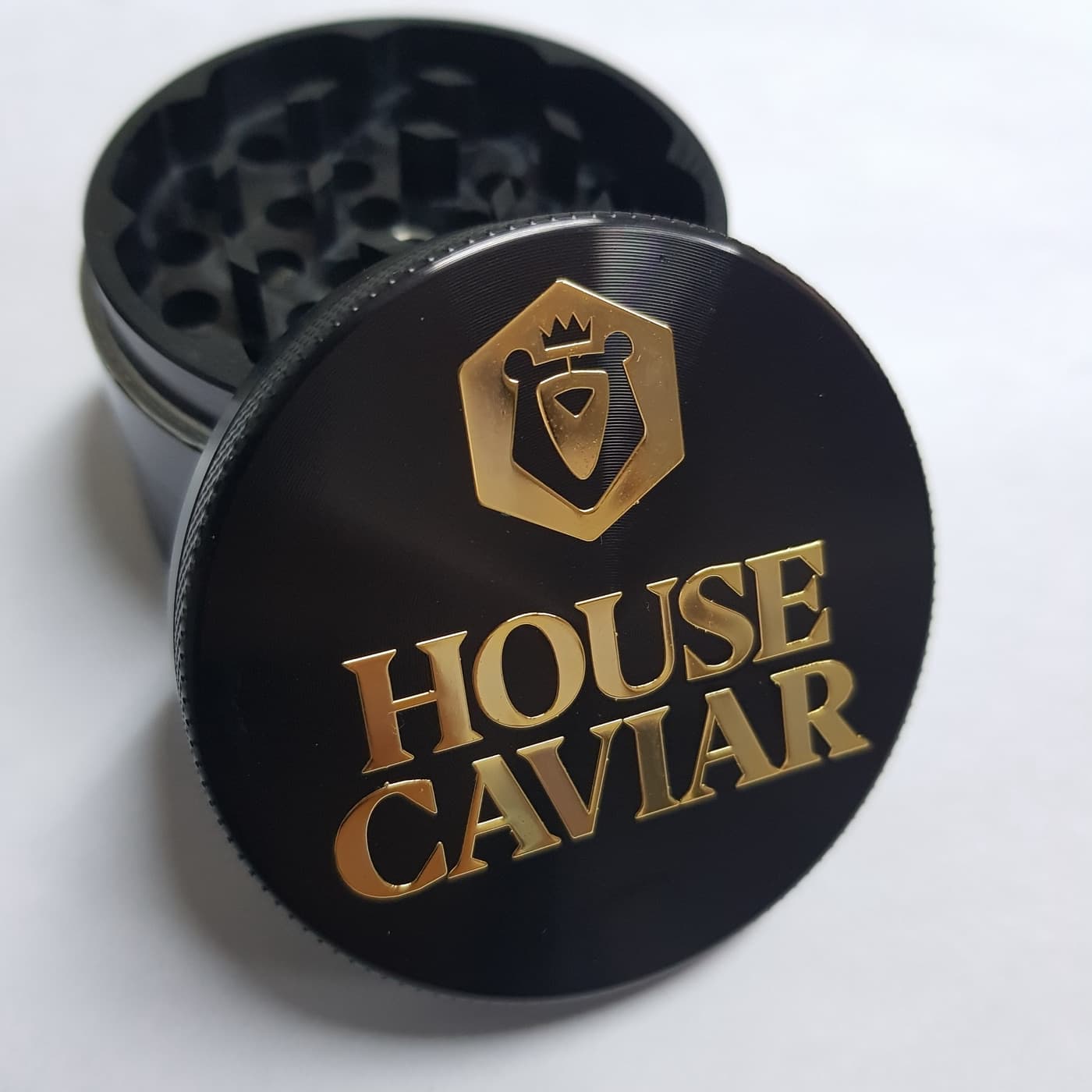
Metal grinders are CNC-machined from 6061-T6 aircraft-grade aluminium. This is the same alloy used in aerospace structures. It has a high strength-to-weight ratio. Metal grinders feel heavy and premium in the hand. They last for years. The branding is 3D-engraved into the metal. You can get it in gold, silver, black, or rose gold. It never wears off. Metal grinders work best for dispensaries, cannabis brands, artists, and anyone who needs logo permanence.
Plastic grinders are clear acrylic with full-color UV printing across the lid. They are lighter and cheaper per unit. They handle complex artwork or photos well. Plastic grinders work best for event giveaways, wedding favors, and high-volume promotions. Reach matters more than longevity in those cases.
CNC machining is a subtractive manufacturing process. A computer-controlled cutting tool removes material from a solid aluminium billet. It creates the grinder body, teeth, and threads with micron-level precision. The result is a tool with consistent tolerances. Cast or moulded alternatives cannot match this precision.
The ASI Global Ad Impressions Study found that premium metal hard goods generate 2.3x more impressions per dollar over their lifetime. They beat surface-printed alternatives by a wide margin (ASI, 2023). Here is the practical math. A $25 branded metal grinder lasts 5 years. It gets used over 400 times each year. That adds up to roughly 2,000 brand impressions for $25. The cost is about $0.0125 per impression. A $5 plastic giveaway lasts maybe 3 months before it cracks. It might deliver 100 impressions at $0.05 per impression. The metal grinder pays for itself 4x over.
2. How Do You Want Your Logo on There?
| Method | Look | Best For | Durability |
|---|---|---|---|
| 3D metal engraving | Raised metallic relief (gold, silver, black, rose gold) | Brand logos, typography, geometric designs | Permanent |
| Laser engraving | Surface-etched into metal | Detailed logos, fine typography | Permanent |
| Full-color UV print | Photographic direct-to-body printing | Complex artwork, gradients, photos | Surface-level, wears over time |
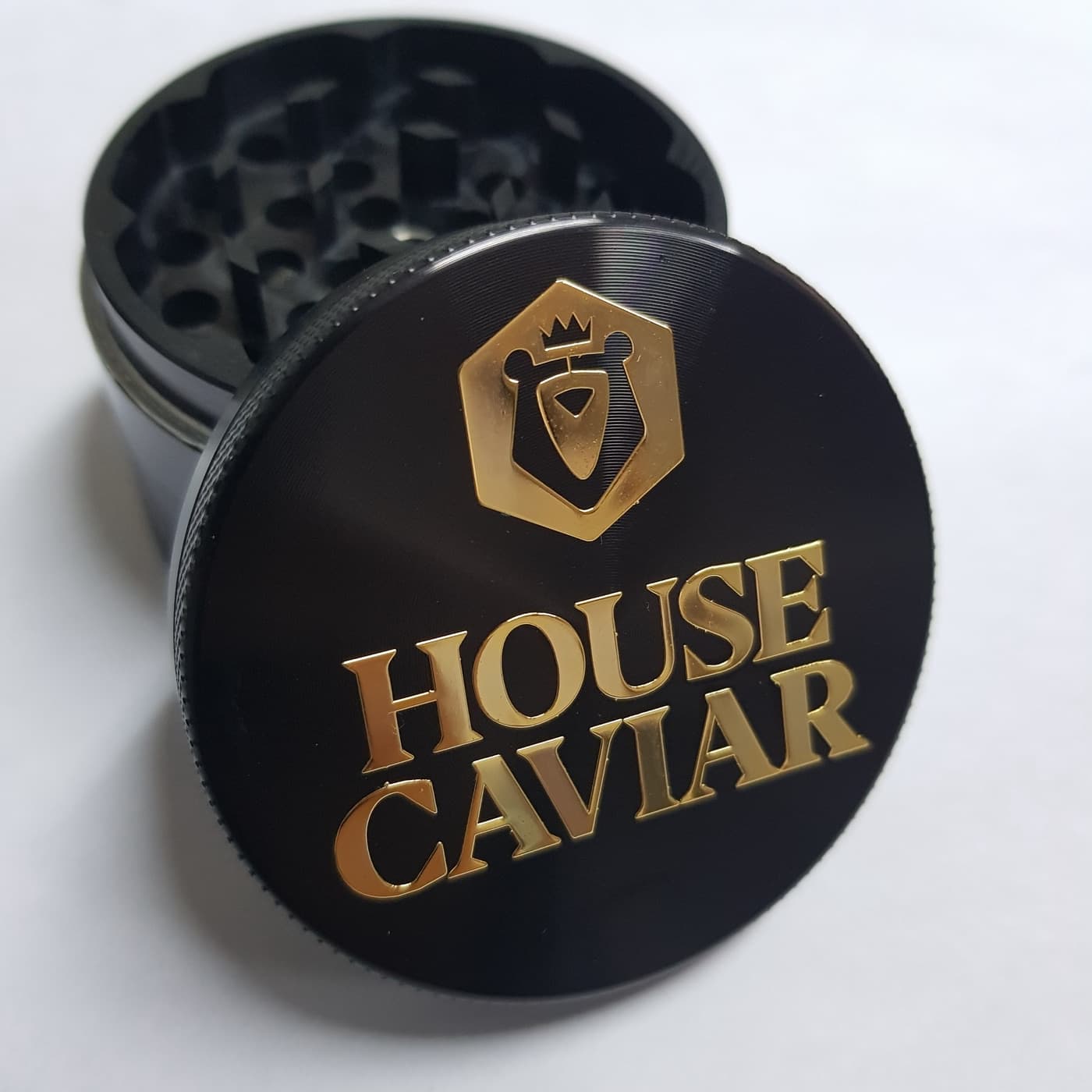
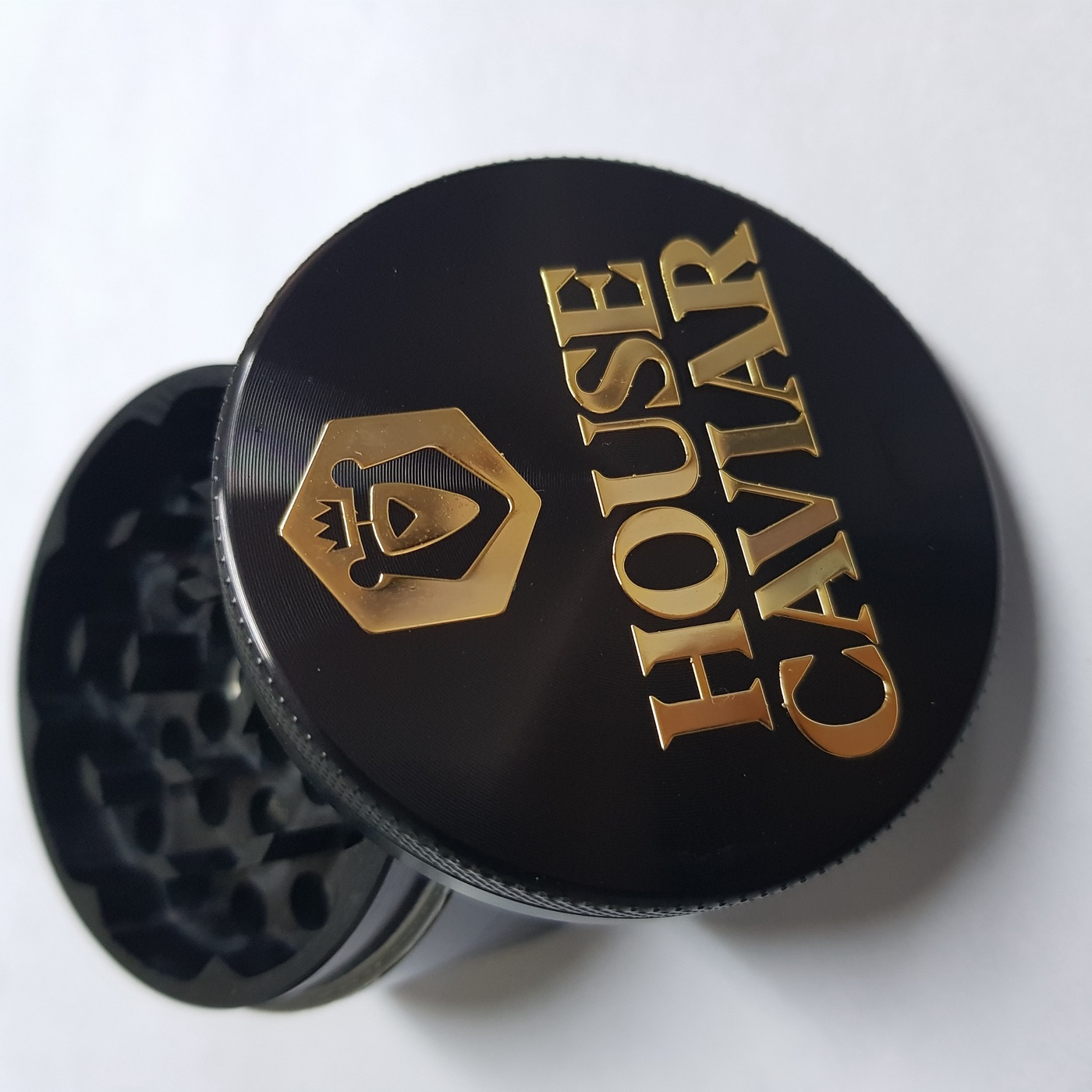
3D metal engraving is a CNC process that leaves the logo raised and embossed out of the lid, finished in gold, silver, black, or rose gold. The result is tactile. You can feel the logo with your thumb. Laser engraving removes the anodized layer. It exposes raw aluminium underneath. This creates a subtle, matte mark without added color. UV print lays a polymer ink layer on the surface. It cures the ink with ultraviolet light. UV print handles photographs and gradients that engraving cannot. But it sits on top of the metal. It does not become part of it.
Anodization is an electrochemical process. It converts the aluminium surface into a durable, corrosion-resistant oxide layer. Type III hard-coat anodization is the grade used on premium grinders. It increases surface hardness to 60 to 70 HRC (Rockwell Hardness). Painted finishes only reach 20 to 30 HRC (Metal Finishing, 2025). The color soaks into the oxide pores before sealing. It cannot peel or chip.
GMI internal data (2018-2024, n=127 brand accounts) shows a clear pattern. 3D engraving clients reorder at 70% within six months. UV print clients reorder at 30%. The reorder gap reflects durability. A grinder that still looks new after six months of daily handling generates repeat orders. A grinder with a worn-off logo does not.
3. How Many Do You Need?
Pricing follows a classic manufacturing cost curve. Setup costs spread across volume. CNC throughput improves with batch size.
- 1-9 pieces: Digital proof in 1 business day. Production takes 10 to 20 days. 2-part from $50, 4-part from $75. Good for samples or one-off gifts.
- 10-99 pieces: 2-part from $25 per unit, 4-part from $35 per unit. Free proof. Standard production. This is where per-unit costs start dropping meaningfully.
- 100-499 pieces: 2-part from $12 per unit, 4-part from $18 per unit. Dispensary chains and brand merch programs land here.
- 500+ pieces: 2-part from $5.99 per unit, 4-part from $7.99 per unit. Bulk pricing reaches its floor. Each extra unit past 500 adds only marginal savings.
4. What Happens After Someone Takes It Home?
Most buyers skip this question. A custom grinder is not a t-shirt. It is a tool someone uses every day. If it is good, it stays on the counter for years. If it is cheap, it ends up in a drawer within a month. The quality of the grinder IS the quality of your brand in someone's mind.
Research from MunchMakers found that regular cannabis users grind 5 to 14 times per week. That averages 416+ uses per year. Add shared use in social settings. Each grinder generates over 500 brand impressions per year (MunchMakers Usage Study). A grinder that lasts 3 to 5 years generates 1,500 to 2,500 impressions from a single unit.
Think about the practical difference. A dispensary hands out 200 cheap plastic grinders at a festival. Most break or get tossed within a weekend. The same dispensary sells 200 premium metal grinders with their logo at $15 each. They create 200 walking billboards. Those billboards generate impressions for years. When the grinder is high quality, customers link that quality with your shop. When it fails, they link that failure with your brand.
Five Questions to Ask Any Supplier
Before you place an order, ask these five questions. The answers tell you if you are dealing with a manufacturer or a reseller.
1. "Where are your grinders made?" A manufacturer can tell you the factory location. They know the machining tolerances and material source. A reseller says "our partner facilities."
2. "What grade of aluminium do you use?" The correct answer is 6061-T6 aircraft-grade. "High-quality aluminium" without a grade number means zinc alloy or low-grade recycled material.
3. "Can I see a photo of an actual engraved grinder, not a render?" Rendered mockups look perfect. Real engraving on a curved metal lid always differs from a 2D screen. A manufacturer has real product photos ready to share.
4. "What is your reorder rate for branded grinders?" GMI internal data shows 70% within six months for anodized and 3D engraved products. If a supplier will not share or claims 100%, they are either lying or have not done enough volume to know.
5. "What happens if I am not happy with the proof?" A manufacturer offers free revisions until you approve. A reseller charges for changes. Or they pressure you to accept what you get.
Quick Decision Framework
| Your situation | Choose |
|---|---|
| Dispensary retail product | Metal, 3D engraving |
| Event giveaway (500+) | Plastic, UV print |
| Client or corporate gift | Metal, 3D engraving |
| Brand merch for loyal customers | Metal, 3D engraving |
| Testing a new market | Plastic, UV print, small batch |
Frequently Asked Questions
How to make a herb grinder?
A herb grinder starts as a cylindrical body machined from 6061 aircraft-grade aluminium. Diamond-shaped teeth are cut into the grinding chamber. The lid gets threaded with a rare-earth N52 magnet. Then the grinder is finished with anodization and 3D engraving. GMI CNC-machines every grinder from raw billet. The ASM International materials database lists 6061-T6 as the standard for precision-machined consumer tools that need corrosion resistance.
What is a custom grinder?
A custom grinder is a CNC-machined herb grinder with your logo permanently marked on it. 3D engraving leaves the design raised and embossed out of the metal, finished in gold, silver, black, or rose gold. The PPAI reports that branded metal products keep 85% advertiser recall after two years. That far outperforms printed alternatives.
How do custom grinders work?
Custom grinders work just like standard grinders. You twist the lid to grind flower between diamond-cut teeth. The branding is CNC-engraved into the lid before anodization. It becomes part of the metal structure. Research from MunchMakers confirms that daily-use grinders generate 416+ brand impressions per year.
Where can I buy herb grinders?
GMI sells custom herb grinders directly at gmigrinders.com. There is no minimum order. Bulk pricing starts at $5.99 per unit for 500+ units. The ASI Global Ad Impressions Study found that premium metal products generate 2.3x more impressions per dollar than surface-printed alternatives.
What does a weed grinder look like?
A weed grinder is a cylindrical device. It is 45mm to 64mm wide. It has two or more chambers. The top half has grinding teeth. The bottom half catches ground material. Premium grinders use 6061 aircraft-grade aluminium. They have diamond-cut teeth and rare-earth magnets. The Journal of Manufacturing Processes confirms that precision-milled cutting edges stay sharp 3x to 5x longer than cast equivalents.
How long does a custom grinder last?
A premium CNC-machined grinder with anodized finish lasts 10 to 20 years with basic care. The teeth stay sharp. The threads stay smooth. The magnet keeps its strength. Cheap zinc alloy grinders typically fail within 3 to 6 months. Teeth chip, threads strip, or the magnet pops out. The Magnetics Industry Association confirms that N52 neodymium magnets keep 95% of their magnetic flux density over 10 years. Standard ferrite magnets drop to 60% to 70% in the same period.
Ready to see your logo on a grinder? Get a free digital proof →
Related reading:
- Bulk Branded Grinders: custom-logo grinders from a single unit, no minimum
- Personalized Herb Grinders: browse the personalized grinder range
- Custom Logo Grinders: design a customizable grinder with your logo
- Custom Grinder Pricing Guide: detailed breakdown of pricing tiers
- Premium Grinder Guide: what separates a $3 grinder from a $30 one
- Wholesale Custom Grinders Guide: what to ask before you order 500+ units
- Cannabis Branded Merchandise Guide: broader merch strategy for cannabis brands
- Custom Grinder Suppliers Compared: GMI vs MunchMakers vs SmokePromos on minimums and pricing
- Smoking Accessories Industry Statistics 2026: the market size behind the decision