Key Takeaways
- 8-Year Partnership: Run The Jewels has ordered custom grinders from GMI since 2018. Their per-unit cost has stayed stable across all those years.
- Premium Only: RTJ rejected screen printing and UV printing on the first call. They only wanted 3D metal engraving on black anodized aluminium.
- First Run Failed, GMI Fixed It: Engraving depth was too shallow on the first batch. GMI re-machined the whole run at their own cost.
- Sold Out Every Tour: RTJ grinders sell out at shows. Fans post them on Instagram without being asked.
- Data Backs the Choice: GMI data shows 3D engraving clients reorder at 70% within six months. UV print clients reorder at 30%.
Summary
Run The Jewels is a hip-hop duo. Killer Mike and El-P have been loud and public about smoking weed for decades. They are not a cannabis brand. But when they wanted custom grinders for their merch line, the grinder had to be as hard as the music. This case study looks at what that collaboration looked like. What went wrong. Why it still works eight years later. And what other brands can take from it.
The Brief
RTJ's team reached out through their management in 2018. They needed custom grinders for tour merch. Not cheap giveaways fans would throw away. Premium. The design was their own. The RTJ pistol logo, clean and unmistakable. Our job was to machine it right.
Design Standards That Set RTJ Apart
Most artist merch follows a simple playbook. Slap a logo on a t-shirt. Sell it at the booth. RTJ took the opposite approach. Their management insisted on three things. The grinder had to feel weighty in the hand. The logo had to look permanent. And the unboxing had to feel like an experience. They sent reference photos of luxury watch packaging. They wanted that level of care.
That level of attention narrowed the manufacturing options fast. Screen printing and UV printing were rejected in the first call. Only one technique met all three criteria. 3D metal engraving. GMI had been doing it since 2014.
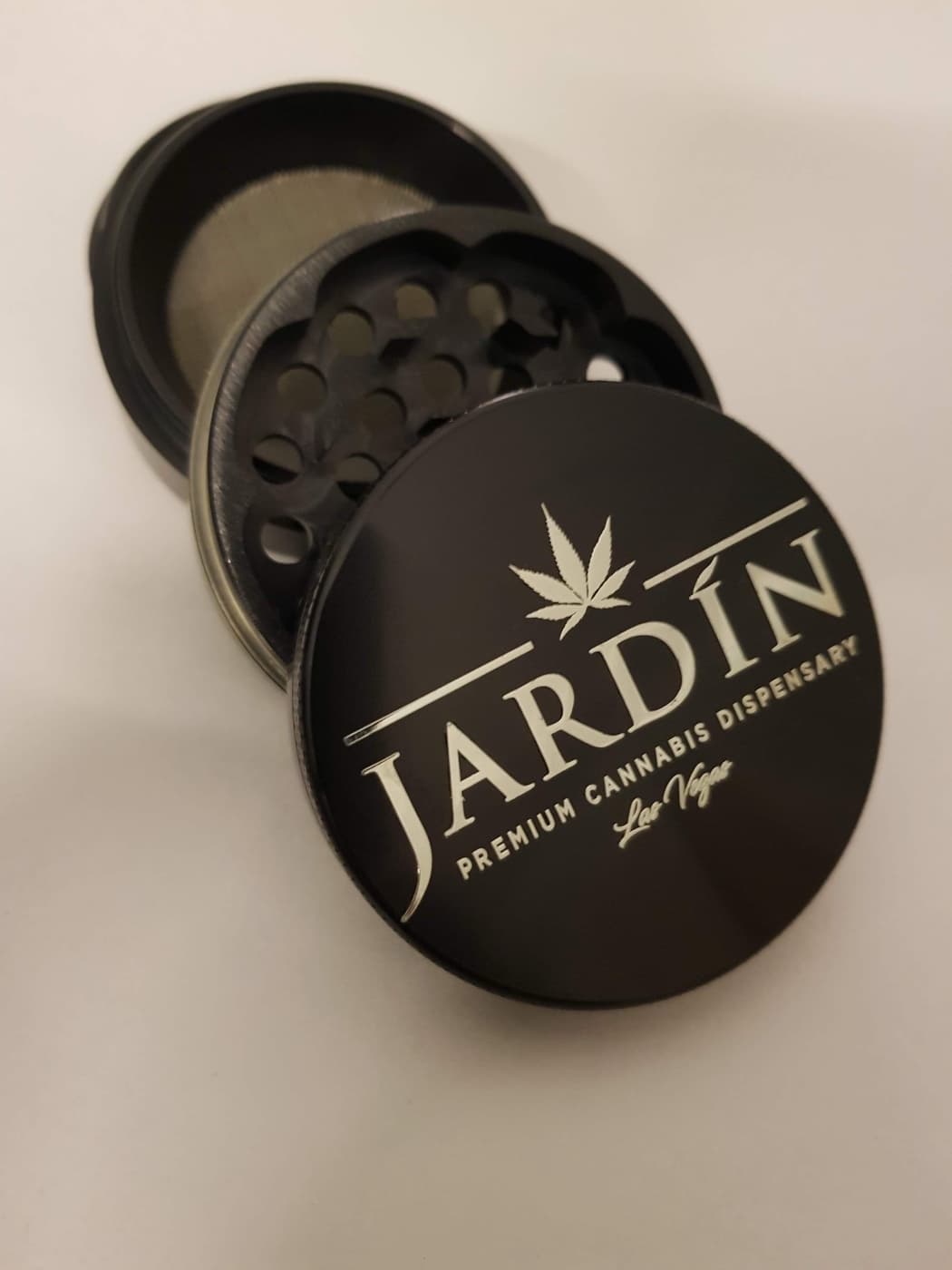
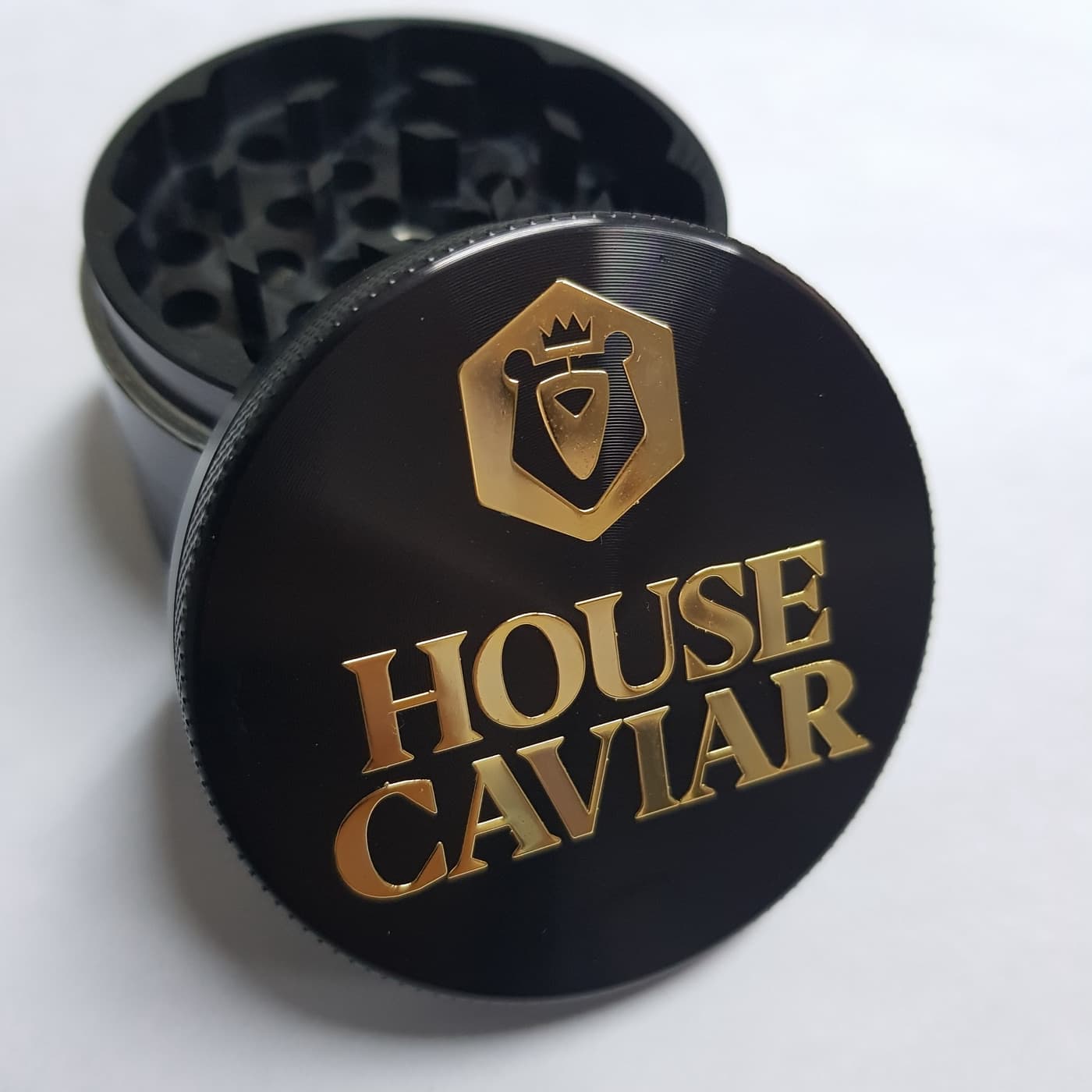
3D metal engraving is a CNC machining process. It leaves the logo raised and embossed out of the metal lid, finished in gold, silver, black, or rose gold. Unlike UV printing or laser etching, the engraving is structural. It never wears off. It never peels. It never fades.
What We Did
- Material: 6061-T6 aircraft-grade aluminium, hard-anodized black
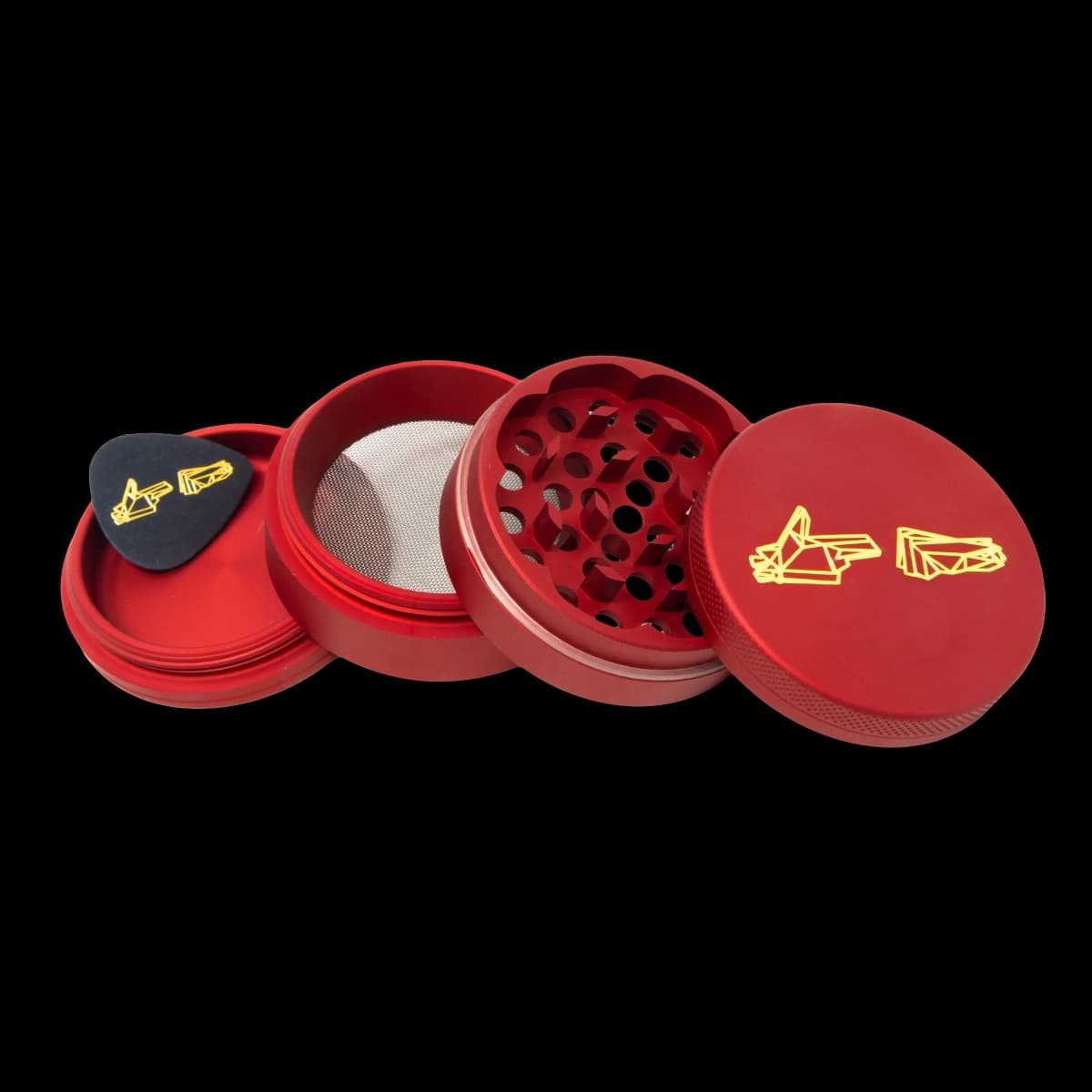
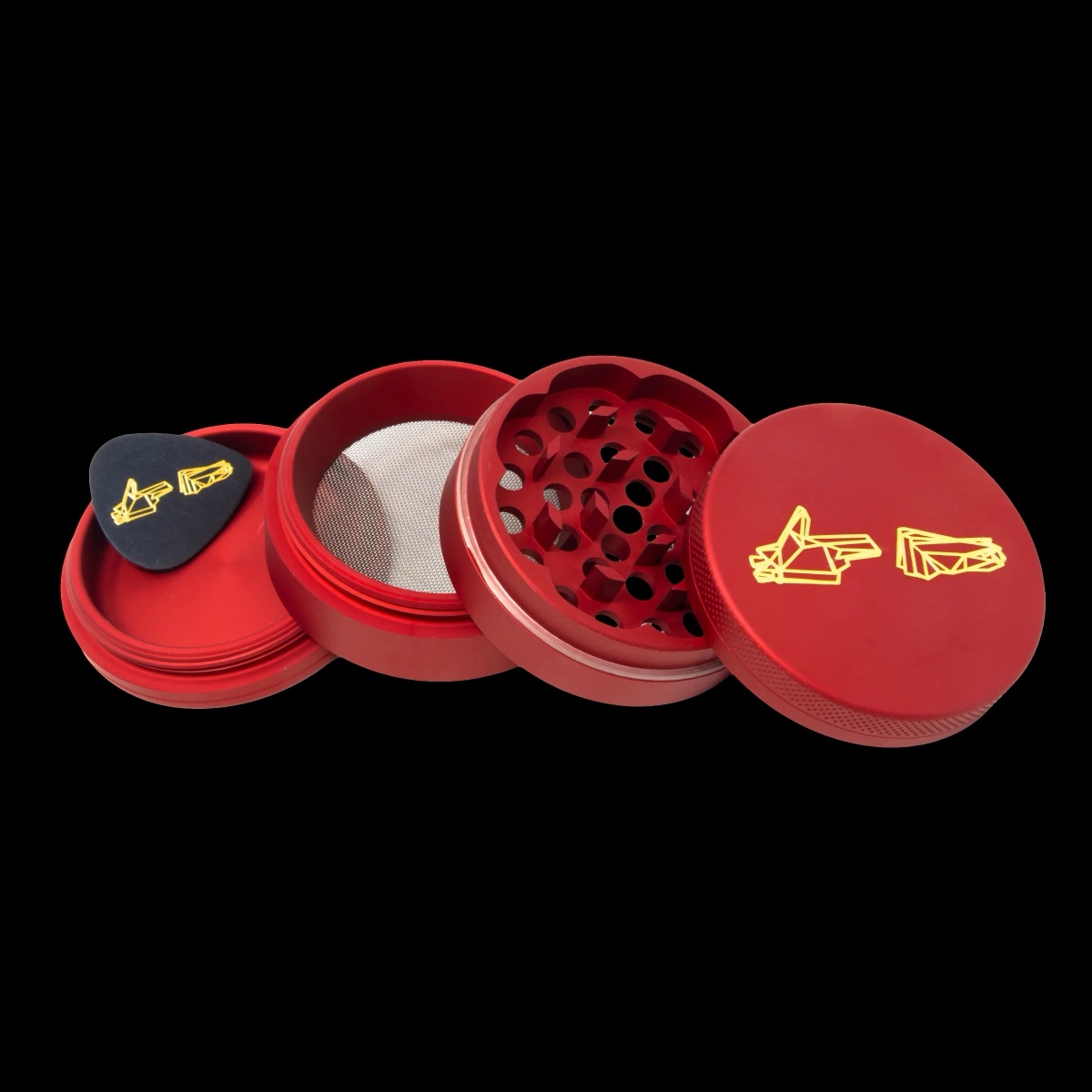
- Branding: 3D metal engraving in silver, the RTJ logo embossed into the lid
- Finish: Type III hard-coat anodize with silver engraving for contrast
- Packaging: Custom boxes with RTJ artwork, ready for retail sale
Type III hard-coat anodize is an electrochemical process. It builds a 25 to 50 micron oxide layer on aluminium. It doubles surface hardness compared to standard Type II anodize. It resists scratches from keys and pocket wear. It will not chip when dropped on concrete. This finish is the difference between looking new after two years and looking worn after two months (MIL-A-8625).
N52 neodymium magnets are the strongest commercially available permanent magnets. In a grinder lid, an N52 magnet rated at 3.5+ lbs of pull force keeps the lid secure. It will not pop open in a backpack or bag. Lower-grade magnets like N35 are common in budget grinders. They lose grip over time. The lid pops off. Ground flower spills everywhere (K&J Magnetics).
What Went Wrong (And How We Fixed It)
The first run's engraving depth was too shallow. It was under 0.2mm. The silver did not pop against black anodize the way RTJ's team expected. We re-machined the entire batch at our own cost. We cut to 0.4mm depth. We adjusted the anodize timing. The second batch shipped three days late. But it looked right.
That experience shaped every high-profile run since. We test engraving depth on sample lids before committing to production. We photograph every prototype under three conditions. Concert lighting. Retail shelf lighting. Daylight.
What This Taught Us
Three days late on a tour merch deadline is not a small thing. RTJ's management was direct about it. But they also told us the honesty mattered more than the delay. We did not ship subpar product and hope they would not notice. We caught it. We ate the cost. We fixed it.
That became the unspoken contract for every reorder since. When RTJ changed their logo treatment for RTJ4, they sent us the new artwork six weeks early. They asked for prototype photos in three lighting conditions. We had the process ready because we built it after the first run.
The Result
The grinders sold out at tour shows. Fans posted them on Instagram. Nobody asked them to. The grinder looked good enough to share. It became part of the RTJ identity. Not just merch. A statement that matched the quality of the music.
"We don't do anything halfway. If we're putting our name on it, it better be right." RTJ's management, on why they chose GMI
A 2023 survey by Luminate (formerly Nielsen Music) found that 53% of music fans who buy artist merchandise say quality is the top factor in whether they buy again. For superfans, the top 20% of music spenders, that number jumps to 71%. RTJ's grinders hit exactly that bar (Luminate Music 360 Report).
Why It Worked: The Data
RTJ did not need cheap. They needed a manufacturer who could match the quality of their music. That is the common thread across every long-term client.
GMI internal data (2018-2024, n=127 brand accounts) shows the pattern. Brands starting with premium finishes like RTJ's 3D engraving reorder at 70% within six months. UV-printed alternatives reorder at 30%. The average client lifetime for engraving clients is 4.2 years. For surface print clients it is 1.8 years.
| Finish Type | 6-Month Reorder Rate | Typical Unit Cost (500 pcs) |
|---|---|---|
| 3D Metal Engraving | 70% | $18-25 |
| UV Printing | 30% | $12-15 |
| Laser Etching | 45% | $14-18 |
The Advertising Specialty Institute's Global Ad Impressions Study found that premium metal engraving generates 2.3x more impressions per dollar over product lifetime. It beats surface printing by a wide margin. The Promotional Products Association International reports that promotional products generate 3,300 impressions over their lifetime. And 85% of recipients recall the advertiser's name.
The Pattern
RTJ has reordered grinders for multiple tours over eight years. Each time the design changes slightly. Logo placement shifts. The RTJ4 era brought a bolder treatment. The RTJ2 reissue used a deeper engraving fill. The manufacturing does not change. Find a manufacturer who gets it right. Stick with them.
Across eight years of orders, RTJ's per-unit cost has stayed stable. That is unusual in custom manufacturing. Material prices and labor costs typically push prices up 3% to 5% each year. It works because GMI locks material contracts with suppliers annually. And RTJ's consistent order volume of 400 to 600 units per run lets us batch their production efficiently alongside other engraving jobs.
The result is simple. RTJ gets a product that sells out every tour. GMI gets a client who never shops around. Both sides win.
What This Means for Artist Merch Brands
RTJ's approach is not common. Most artists treat merch as a revenue line item. Order the cheapest option. Mark it up. Sell it. But the data suggests that strategy leaves money on the table.
A 2024 report from Billboard and Goldman Sachs projects the global music merchandise market to reach $16 billion by 2030. Growth is driven largely by premium and limited-edition products. The artists seeing the fastest merch revenue growth offer fewer, better items. Not more, cheaper ones.
For brands and artists thinking about custom grinders, RTJ's playbook is simple. Pick a premium manufacturing technique. Test prototypes under real conditions. Do not ship anything you would not buy yourself. The upfront cost is higher. But the reorder data says it pays for itself within the first year.
Quick Decision Framework
| If your priority is... | Choose... |
|---|---|
| Long-term brand consistency | 3D engraving + Type III anodize |
| Lowest upfront cost | UV printing |
| Fast turnaround (under 2 weeks) | Laser etching |
| Collector-grade merchandise | 3D engraving |
Frequently Asked Questions
What is 3D metal engraving?
3D metal engraving is a CNC machining process. It leaves designs raised and embossed out of the metal, finished in gold, silver, black, or rose gold. The engraving is structural, not a surface print. It never wears off. The ASM International database confirms that machined-in markings outlast surface-applied finishes by 5x to 10x in consumer tooling (GMI Custom Grinders).
How long do custom grinders last?
A 6061-T6 aluminium grinder with 3D engraving and Type III hard-coat anodize lasts 5+ years of daily use. The branding cannot chip, rub off, or fade. It is part of the metal structure. RTJ's eight-year reorder history proves the durability. The Aircraft Materials database confirms 6061-T6 resists corrosion and keeps tolerances under heavy daily use.
What makes a grinder premium enough for artist merch?
Six things: 6061-T6 aircraft-grade aluminium, diamond-cut CNC teeth, N52 neodymium magnets rated at 3.5+ lbs pull force, precision-machined threads at +/-0.05mm, stainless steel mesh screens, and Type III hard-coat anodization. ASM International lists 6061-T6 as the standard for precision-machined consumer tools. Read our premium grinder guide for the full breakdown.
How much do custom engraved grinders cost?
For 500 units, 3D metal engraving runs $18 to $25 per unit. Custom packaging is included. UV-printed alternatives cost $12 to $15 but have much lower reorder rates. GMI internal data (2018-2024) shows 3D engraving reorders at 70% vs 30% for UV print (GMI Client Data). See our custom grinder pricing guide for volume pricing across all tiers.
Can you match a specific brand color in the engraving fill?
Yes. GMI offers gold, silver, black, and rose gold as standard engraving fill colors. For brands with specific Pantone requirements, we can custom-match fill tones. Type III anodization absorbs color into the oxide pores before sealing, so the finish never peels or chips (Anodizing.org). Send us your brand guide. We will produce a sample lid before committing to production.
How does Run The Jewels use custom grinders in their merch line?
RTJ sells 3D-engraved grinders at tour shows and through their online store. Each grinder uses black anodized aluminium with a silver engraved pistol logo. Fans buy them as collectible items, not just functional tools. A Luminate survey found 53% of music fans rank quality as the top factor in repeat merch purchases. The grinders have sold out at every tour stop since 2018 (GMI Client Data).
Related Reading
- Wholesale Custom Grinders Guide: what to ask before you order 500+ units
- Custom Grinder Pricing Guide: detailed breakdown of pricing tiers
- Premium Grinder Guide: what separates a $3 grinder from a $30 one
- Jacana Rose Gold Grinder Case Study: how one brand built loyalty with custom grinders